Any thoughts?
When are prospective parents justified in discarding embryos?
Is it acceptable, for example, for diseases like GSS, that develop in adulthood?
What if a gene only increases the risk of a disease?
And should people be able to use it to pick whether they have a boy or girl?Or the eye color?

I find this story incredibly interesting. I find it inspiring because the family succeeded at having children that were free of the life threatening disease. I also find it very sad that the family is going to have to tell the children, and live through the death of the mother very early in life. This is a good article for some of the group projects in science class right now. We should have a discussion upon this article in class, because it's very interesting but hard to follow at the same time. I think the class would get a lot out of a discussion about the document. What do you think?
ReplyDeleteSummary / Rundown of Article & Question from Maxine:
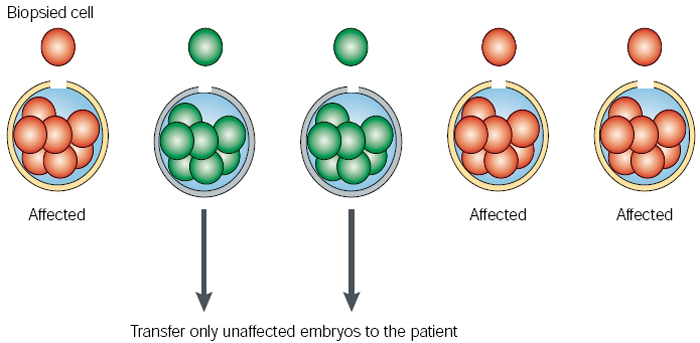
ReplyDeleteThis is a story about Amanda Baxley and and her boyfriend and now husband, Bradley Kalinsky. She had "the gene for Gerstmann-Straussler-Scheinker disease, or GSS, which would inevitably lead to her slow and terrible death". She didn't want to pass on this disease to her children so her decided not to ever have a children. Like many couple around the world today they choose to go through vitro fertilization. In vitro fertilization you have "cells from the embryos, created in a petri dish with her eggs and his sperm, tested first for the disease-causing gene. Only embryos without the gene were implanted. The Kalinskys are now parents of three children who will be free of the fear of GSS." There is much controversy about the topic of vitro fertilization. When are prospective parents justified in discarding embryos? Is it acceptable, for example, for diseases like GSS, that develop in adulthood? What if a gene only increases the risk of a disease? And should people be able to use it to pick whether they have a boy or girl? This procedure is a rapidly growing in the United States. The systems that now Amanda Kalinsky, who is now 30, will begin to happen around the ages 30 - 50. "She will begin to stumble like a drunk. will follow, and possibly blindness or deafness. Five years after the onset of symptoms, she will most likely be dead." Her children will not have this unlike many members of her family. What is your opinion about the process, vitro fertilization that costs $20,000, do you think that it is ethical? Should it remain legal in the United States?
In my opinion, prospective parents are only justified in discarding embryos when they know that the child will suffer from a disease that will make his or her quality of life significantly worse. Children can live a healthy life, or can be a burden on the parents and bring a negative impact to the mental well being of the child. The embryo that has mutated genes should not be discarded if there are only small issues that the child could suffer from such as ADD. If the child will mentally not be able to be happy due to the continued pain he or she feels, then the embryo should be discarded. Why would an adult purposefully want to birth a child with a life of sadness? If a child is able to be stable up until their 50s then I think that they should be able to live. If he or she would be able to live a life of happiness without any health effects until later on, then the child would have a mostly quality life and not of misery. Any person could get hit by a car any day. The chances of this person dying that any day are just higher. If a gene only increases the likelihood of a disease, then the parents should be able to make the decision regarding whether or not they want to take the risk. Parents could chose to select the egg they want fertilized in In vitro Fertilization. The parents are going to have to help the child if he or she is born with a disease, so they must decide how committed they are to a day to day struggle. Personally, I believe that people should not be focused on what the child looks like. The parents should want to have a child because they want to bring happiness into their home along with another person. Looks should not matter. The child will be half of each parent's genes no matter what. Why would anyone want to have someone look unatural?
ReplyDeleteWhen are prospective parents justified in discarding embryos?
ReplyDeleteI believe that it is up to the parents when it comes to justifying embryos being discarded. In the case of ms. Kalinsky, she carries a gene that codes for a deadly disease. It affected her entire family, which is obviously something that she does not want to have happen to her children. When it comes to the perspective of doctors, it is mixed. I agree with the notion that the parents are responsible to do the genetic testing of specific embryos if they have the money to do so. Looking at the big picture, it could possibly get rid of the disease completely if enough people do it.
Is genetic testing acceptable, for example, for diseases like GSS, that develop in adulthood?
Again, I believe it is completely acceptable to do this. Even though you are not giving birth to a child the "natural" way, it is a positive and productive way to have children without worrying about them having to suffer from the same disease. The only problem I would see is telling your kids that their mother is going to eventually die from a disease, because children have trouble grasping these concepts at times.
What if a gene only increases the risk of disease?
This is totally up to circumstance. In my opinion, if you have family history of bad genes, you should either pursue the process of embryo testing or just not have children at all. Many people would have the view of having a child the natural way even if they did have a history of disease, which I completely respect. Overall, I believe that parents should take advantage of technology for this purpose when they have the opportunity.
Should people be able to use it to pick whether they have a boy or a girl? Or eye color?
I do not believe that parents should do this, because this relates to aspects of humanity that are not detrimental. When it comes to these traits, it should be up to chance. It is a controversial topic because many do not want to see science mess around with the "natural way" of birth. If someone were to chose to do this, however, they would definitely need to inform their child.
When are prospective parents justified in discarding embryos?
ReplyDeleteI think it is justified to discard embryos if that embryo has a specific mutation that the parents cannot afford, cannot handle, or simply do not want to have a child with a disease which might end up killing them, like GSS.
Is genetic testing acceptable, for example, for diseases like GSS, that develop in adulthood?
I believe genetic testing is acceptable because I think if the disease is something as terrible as GSS, the parents should have the right to know if their children will have that disease. In Amanda's case, she was able to get an embryo that did not have that GSS gene, and had children that are GSS-free. This was because of the possibility of genetic testing.
What if a gene only increases the risk of disease?
I believe this is different than having the actual disease for sure, but it is important to know that everybody is at risk to get any type of disease. Obviously some people are at more risk to getting a disease because of family history, or environmental lifestyle but I think it's important for a person to know if they are at risk to a disease because then they can try to stay away from things through life that may increase that even more.
and, should people be able to use it to pick whether they have a boy or a girl? Or eye color?
I believe that if I child is born, that it should be half the mothers gene/half the fathers gene. I don't think genetic testing should be used to pick a gender, or pick an eye color or if they want long legs or short legs. I think a child has the right to change what they want and how they are perceived and I don't think it's right for the parents of a child, or fetus, to change what might be their child.
When are prospective parents justified in discarding embryos?
ReplyDeleteI believe its perfectly fine in certain cases. Especially for life threatening diseases, I mean, you can take the "body" of a diseased embryo and place a healthy nucli into the body of the embryo. Essentially, It just may be too painful to know you had the opportunity to watch your child grow up, and instead at a young age you have to tell them you will die soon...
Is genetic testing acceptable, for example, for diseases like GSS, that develop in adulthood?
Yes, its acceptable in my opinion. GSS is a horrible disease, and their are a bunch of other diseases like that. I think it's acceptable to genetically alter, and possibly save a life at an early age. I don't think its acceptable to choose gender, hair color, eye color, people should love how their children look. This also applies to disorders like ADHD and Autism, if there is no cure, I believe it should be cured at an early age.
What if a gene only increases the risk of disease? and, should people be able to use it to pick whether they have a boy or a girl? Or eye color?
As stated before, I believe that people should NOT be able to choose looks of a child. I find it completely insulting, humans are not pets you can breed to your advantage. Including, today people already hate how their hair, or etc looks, that is not going to change that. Furthermore, if a gene only creates more problems, we will essentially find that problem. If it has the same effects like GSS then I wouldn't know.
When are prospective parents justified in discarding embryos?
ReplyDeleteProspective parents are justified in discarding embryos only when it is assured that the embyro will have a harmful disease or disorder. Then, we could prevent these children from going up to live sad or short lives. We would also save money on health care.
Is genetic testing acceptable, for example, for diseases like GSS, that develop in adulthood?
Genetic testing should be acceptable because if one had a chance to prevent a disease that would lead to sad, unhappy lives, it should be acted upon. You could save a lot of money in the future as well as create a world with less disease and death for families.
What if a gene only increases the risk of disease?
If there is only a chance, then it should not be acted upon. Only if it is definite should it be acted upon because then we would create a governmental system of natural selection and create a superior race. This would be unacceptable if humanity is to act in unity and fairness as a species.
and, should people be able to use it to pick whether they have a boy or a girl? Or eye color?
If parents are able to choose the diseases that they don’t want their children to inherit, then parents should still not be able to choose hair, gender, skin, and eye color. These traits should be off limits because preventing diseases is one thing, but entering the realm of creating human beings for petty things is not something that should happen. Parents should not tamper with things that their own genes passed on because if we change things that come from us, are they really our children anymore, or simply our engineered creations? Parents should only be allowed to change things that would negatively affect their children, not things that they wish their children had. As they grow up, they are going to be made to believe that they are part of the superior race. Things normally left up to God or chance,would be made a parental decision. The beauty of natural creation will lose its meaning. Any excitement about how it will look or behave will be come predetermined and less real. Our children are not robots to be physically changed at our own will.
When are prospective parents justified in discarding embryos?
ReplyDeleteJust like Adam stated, I think it’s up to the parents to discard embryos. I think this especially justifiable when the parents are diagnosed with a deadly disease that can be passed down to their kids.
Is it acceptable, for example, for diseases like GSS, that develop in adulthood?
Genetic testing is definitely acceptable. All families should have the opportunity to have kids who will live long and healthy lives. This would save families a lot of tears and money.
What if a gene only increases the risk of a disease?
This is where the line should be drawn for genetic testing. Similar to what Christeline said, a gene that definitively codes for a disease justifies genetic testing. As for a gene that only increases the risk of a disease - altering those genes would begin a shift towards a GATTACA type of world in which we create more and more superior humans.
And should people be able to use it to pick whether they have a boy or girl? Or the eye color?
In my opinion, people should not be able to choose the gender or eye color of their baby. Preventing a child from receiving a deadly disease from a parent is fine, but when parents begin to choose the the physical traits of their son/daughter as if they were ordering a meal at a fast food joint is not ethical.
When are prospective parents justified in discarding embryos?
ReplyDeleteI think that parents should be able to decide weather or not to get rid of their embryos or not. I don't think that it is necessary for others to get involved. If both people agree that they do not want the embryo then the decision should be theirs.
Is genetic testing acceptable, for example, for diseases like GSS, that develop in adulthood?
Genetic testing should be acceptable because if someone had a chance to stop a disease then I think that they should do whatever is necessary. You could stop a lot of people from having diseases and also help to find a cure.
What if a gene only increases the risk of disease?and, should people be able to use it to pick whether they have a boy or a girl? Or eye color?
I think that if a gene only increases the risk of a disease we should try and find the problem in the gene. As for parents being able to change the appearance of their children I don't think that that is okay to do. Parents should love their kids just the way they are. Children shouldn't have to change to receive their parents love.
When are prospective parents justified in discarding embryos?
ReplyDeleteProspective parents are justified in discarding embryos when they discover that they are carriers for specific deadly diseases that can be passed on to their kids, generation to generation.
Is genetic testing acceptable, for example, for diseases like GSS, that develop in adulthood?
It is "ethically approved" for diseases because of the severity of the conditions of this disease that are predisposed. I think that it is acceptable for diseases like GSS that develop in adulthood to be tested because they it may cause a decrease in severity and to prevent future generations from being a carrier or recipient of this disease.
What if a gene only increases the risk of disease?
If a gene only increases the risk of disease then that should be collected and studied by those researchers dedicated to the human genome to further prevent and keep safe future generations.
and, should people be able to use it to pick whether they have a boy or a girl? Or eye color?
I think that if people have the resources to do this then it can be allowed. However, the greater good that this testings causes is much more significant than the small number of parents how use it only for their own needs won't be such a terrible outcome. In other words, parents should be the ones to decide what they want to do about their own offspring.
When are prospective parents justified in discarding embryos?
ReplyDeleteI believe that parent's should have the right to decide whether or not they want to discard their embryos. If the embryo is screened for a genetic disorder and the results come back as positive (that the child does contain a disorder like Huntingtons, downs syndrome, PKU etc) then the parent should be allowed to discard the embryo. I don't think the doctor should have much of a say in the decision because it is a matter of raising the child with health complications and if the parents are ready to sign up for such a task. Also if the parents have the disease and there is a fear of passing it down to their kids, I think it is also justifiable to discard the embryo.
Is it acceptable, for example, for diseases like GSS, that develop in adulthood?
I agree with Greta. I think genetic screening in embryos should be available for everyone and mandatory for perspective parents so they have an awareness of these diseases and their likelihood before symptoms occur. It would allow for a lot more diseases to be prevented or even cured in the long term.
What if a gene only increases the risk of a disease?
If a gene expressed a high likelihood of through genetic screening, then the parents should have the decision of whether or not to discard the embryo. I think the discarded embryos should then be used in PCR and genetic engineering to see if a cure or antibiotic can be created to help treat the genetic disorder in question.
And should people be able to use it to pick whether they have a boy or girl?Or the eye color?
I think that genetic engineering should be used for more productive reasons like finding cures for genetic disorders etc. I believe that if eye color or physical traits were changed to match the parents preference a lot of complications could later happen in a situation where DNA profiling is used. Paternity testing could be complicated if certain genes that were from the father's DNA were manipulated through genetic engineered. Parents should just accept their children as they are.